
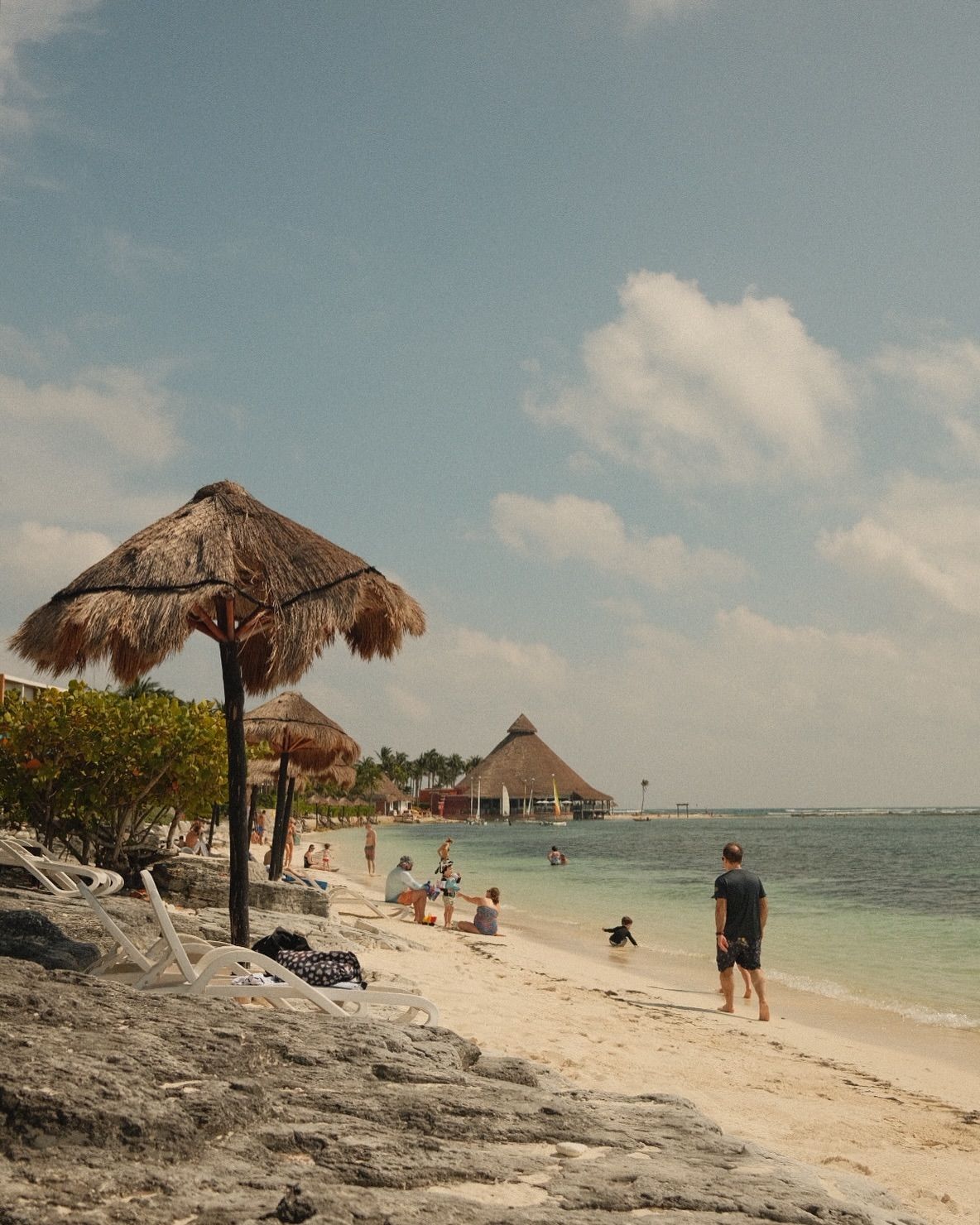
A Look Back at the Destination Before the Mega-Resorts
It's hard to imagine while driving down Kukulcan Boulevard surrounded by resorts, restaurants, and shopping malls, but just over 50 years ago, the Cancun Hotel Zone practically didn't exist.
Cancun was conceived as a planned tourism destination. Development began around 1970, with hotels designed to sit between the Caribbean and Nichupté Lagoon, taking advantage of views and natural ventilation from both sides. In 1974, Cancun officially became an Integrally Planned Center, setting the stage for the tourism corridor we know today.
If you want to experience a different side of the destination, traces of 1970s and 1980s Cancun can still add a completely different perspective to a drive through the Hotel Zone.
Kukulcan Boulevard | The Road That Made the Hotel Zone Possible
Today, imagining Cancun without Kukulcan Boulevard feels almost impossible. But the first version of the avenue was built around 1970 and 1971, when the surrounding landscape looked radically different.
Driving it today essentially means following the backbone of Cancun's original tourism project.
Next time you're taking the bus or driving toward Punta Cancun, look in both directions. That unusual geography,the Caribbean on one side and Nichupté Lagoon on the other,was one of the defining features considered when the destination was designed.
The First Hotels | When Cancun Was Just Learning How to Welcome Travelers
1974 was a defining year for Cancun's hotel industry. Local historical records list Playa Blanca, Villas Tacul, and Bojórquez among the early hotel openings. By 1980, names including Camino Real, Presidente, Club Med, Dos Playas, Maya Caribe, Casa Maya, and Sheraton had joined the growing destination.
Many names, buildings, and concepts have changed over the decades, but tracing what happened to those properties is one way to understand how the Hotel Zone evolved from a handful of hotels into today's resort corridor.
Think of it as tourism archaeology—with air conditioning.
Punta Cancun | Long Before the Nightlife
Today, Punta Cancun is immediately associated with nightlife, restaurants, and entertainment. Back in the 1970s, the area was still building its identity.
One interesting example is Cancun's original convention center, whose construction began in 1975. The first complex looked very different from today's building and was known for its large white dome. That original structure was later demolished and replaced during the 1990s.
Walking around Punta Cancun with that history in mind changes the experience. Long before it became one of Cancun's busiest nightlife districts, it was already being developed as an important meeting point for visitors and events.
Look for Architecture Before Signs
Finding old Cancun doesn't necessarily mean discovering a building that looks exactly as it did in 1975.
Cancun has experienced hurricanes, renovations, rebranding, and decades of tourism development. Instead, pay attention to the scale, orientation, and relationship between older properties and the landscape.
The original plans specifically considered how hotels could take advantage of their position between Nichupté Lagoon and the Caribbean Sea.
Before taking another photo of a brand-new resort, look for lower structures, longtime properties, and small architectural details.
That's often where the story becomes more interesting.
Take a Break by Nichupté Lagoon
To understand the Hotel Zone, you also need to stop looking exclusively toward the Caribbean.
Nichupté is part of what makes this tourism corridor so unusual. From certain points, the Hotel Zone is quite literally framed by two bodies of water.
Find somewhere to slow down by the lagoon around sunset. Rather than checking off another historical landmark, use the moment to appreciate the geography that helped define Cancun from its earliest plans.
Cancun Has More History Than You Might Think
One of the most interesting things about Cancun is just how recent its tourism history actually is.
Some of its earliest hotels opened in 1974, and 18 hotel openings were recorded between 1974 and 1980. By the 1980 census, Cancun's population had already reached approximately 40,000.
In just a few decades, a strip of land between mangroves, lagoon, and Caribbean Sea became one of Mexico's most recognizable destinations.
So next time you're exploring the Cancun Hotel Zone, don't only look for the next beach club.
Look at what came before it.
Want to discover the Cancun that exists beyond the beach? Follow our blog for more stories, places, and unexpected routes around the destination, and follow us on social media to keep discovering a different side of Cancun.
