
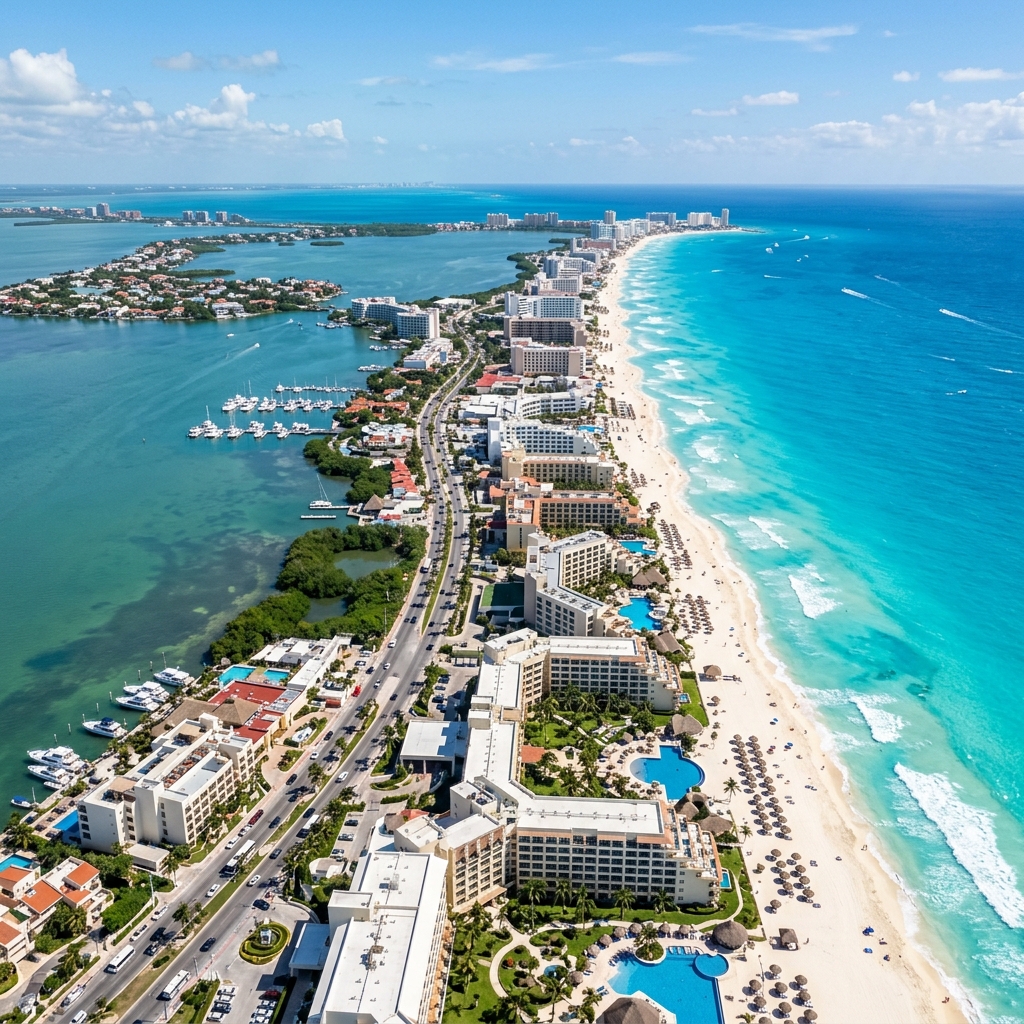
The Cancún Hotel Zone — Zona Hotelera — is a 22-kilometer barrier island connecting two lagoons to the Caribbean Sea. Understanding how it works makes the difference between a mediocre trip and an excellent one.
How the Hotel Zone is structured
The zone runs along Kukulcán Boulevard from km 1 near downtown to km 25 at Punta Nizuc. Addresses use the kilometer marker system — km 9 is the de-facto center, where the main shopping malls, beach clubs, and mid-range hotels cluster.
Three natural sections emerge. The northern stretch (km 1–8) has calmer waters facing Bahía de Mujeres — ideal for families. The central section (km 8–16) holds the highest concentration of resorts, restaurants, and nightlife. The southern end (km 16–25) is quieter, with the best beaches and access to Punta Nizuc snorkeling.
Getting around
The R-1 bus runs the full length of Kukulcán for 14 pesos — cash, exact change preferred. Taxis operate on posted zone rates; confirm before getting in. Uber and inDrive run 30–50% cheaper than street taxis and show the price upfront.
The beaches, honestly ranked
Playa Delfines (km 17.5) is the best public beach — wide, free, consistently cleaned, with strong enough waves for bodysurfing. Playa Tortugas (km 6.5) has the calmest water and suits families with small children. Playa Chac-Mool (km 10) is most central but exposed to stronger currents November through February.
What it does well — and what it doesn't
The Hotel Zone delivers convenience: beach steps from your room, all meals included, airport 20 minutes away. What it lacks is Mexican identity. For Yucatecan food, local markets, and anything culturally specific, cross to El Centro — 45 minutes by R-1 bus.
Costs in 2026
All-inclusives range from $120 to $800+ USD per night. Resort day passes run $80–$150 USD. Beach club minimums are $500–$2,000 MXN. The R-1 bus at 14 pesos is the one genuinely cheap thing on the strip.
