
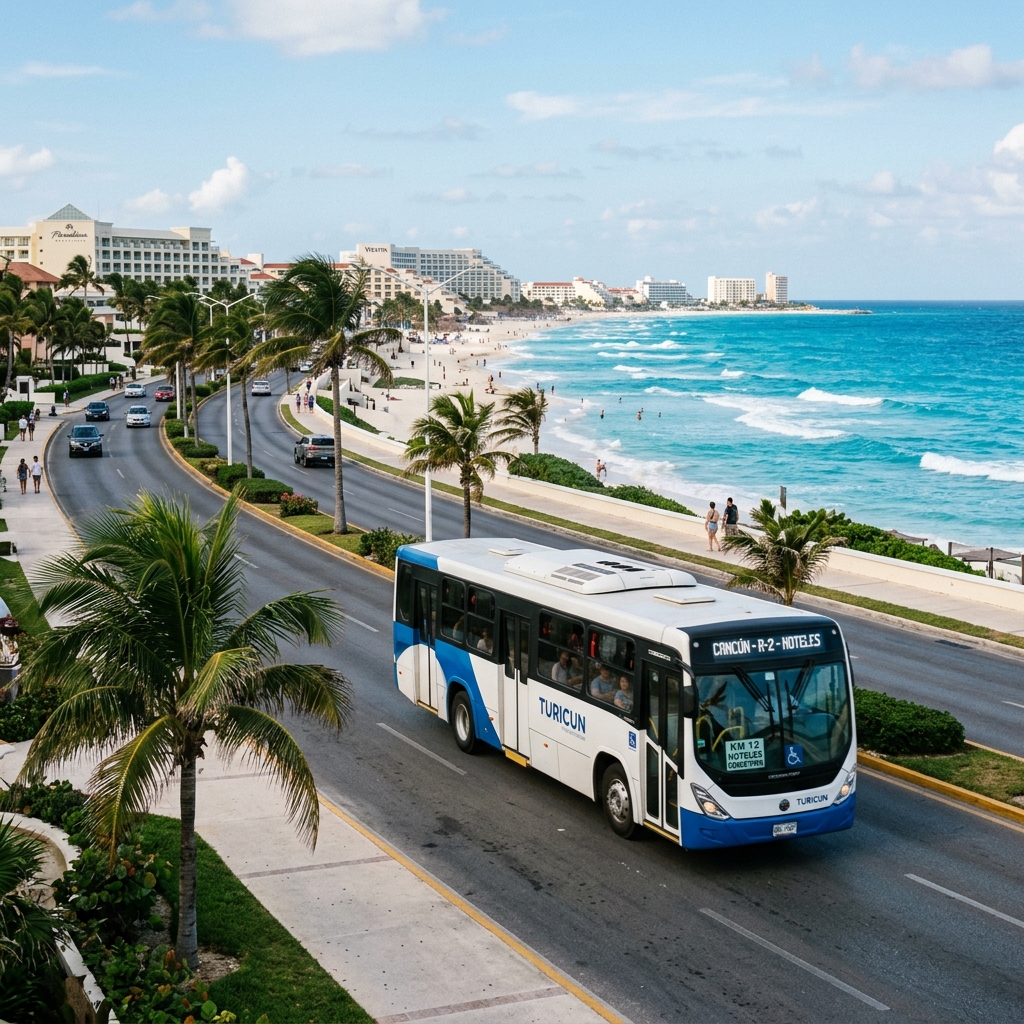
Transport in the Cancún Hotel Zone is simple but expensive if you default to taxis. Four options exist: the public R-1 bus, taxis, ride-hailing apps, and rental cars. Each has a specific use case.
The R-1 bus — best value, slowest option
The R-1 runs the entire length of Kukulcán Boulevard from downtown to Punta Nizuc, seven days a week, roughly every 10–15 minutes. Fare: 14 pesos — cash only, exact change preferred. Expect 20–30 extra minutes during the 10am–2pm peak because of single-lane bottlenecks near the shopping malls.
The R-1 also connects to El Centro (downtown Cancún), making it the only public transit option for authentic food, markets, and local neighborhoods. Full Hotel Zone-to-Centro run: about 45 minutes.
Taxis — convenient but negotiate first
Cancún taxis don't use meters. Zone-based fares are officially posted at most hotels and shopping centers. Many drivers quote tourist prices first — always ask for the posted rate before boarding. Typical fares: Hotel Zone central to airport = 350–450 MXN; between Hotel Zone points = 100–200 MXN depending on distance.
Uber and inDrive — the smarter pick
Both operate openly in Cancún. Prices run 30–50% below equivalent taxi fares. The app shows price before confirmation. One limitation: pickup can be slower at resort exits where taxis control the curb. Walk to the nearest intersection or shopping center entrance for faster pickup.
Rental cars — only for day-trip itineraries
Renting makes sense if you're planning multiple day trips to Chichén Itzá, Cobá, or cenote routes. Within the Hotel Zone itself, parking at beaches and clubs is scarce and the single boulevard creates frequent gridlock. Rent from the airport on excursion days only.
Ferry to Isla Mujeres
Three docks operate from the Hotel Zone: Puerto Juárez (km 1, cheapest), Playa Tortugas (km 6.5, most central), and Punta Sam (km 3, car ferry). One-way passenger fares: 180–250 MXN. Crossing time: 15–20 minutes.
