
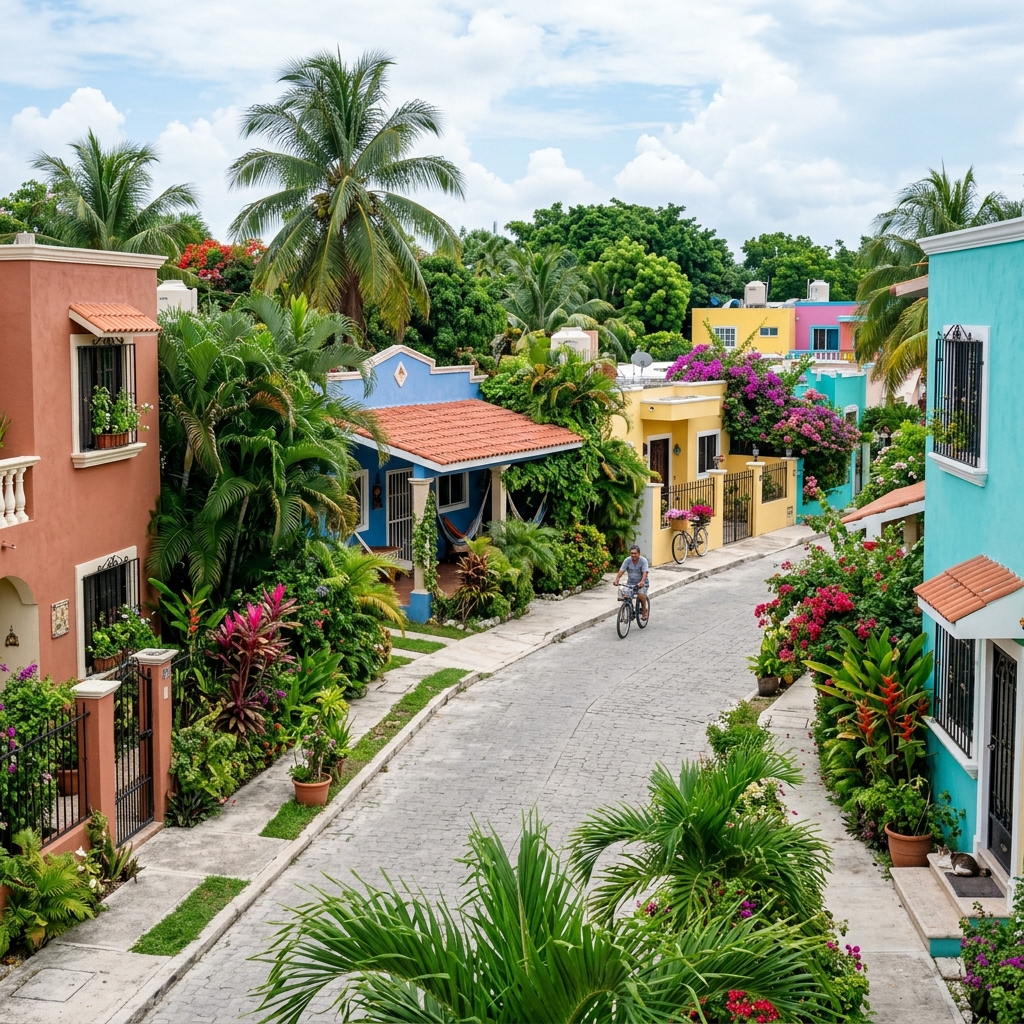
Cancún was planned from scratch in the 1970s and its neighborhoods — called supermanzanas (super-blocks) — were designed in a numbered grid. The system works: each supermanzana has its own schools, parks, and markets. Understanding them gives you access to a city that 900,000 people actually live in, rather than the tourist layer on top of it.
How the supermanzana system works
Supermanzanas are numbered from SM 1 (near the first Hotel Zone junction) outward. Lower numbers generally correspond to older, more central neighborhoods; higher numbers tend to be newer and more suburban. Each supermanzana covers approximately 4 blocks by 4 blocks, with a central green space or community facility. The system makes navigation easier than it first appears — if someone gives you a street address in Cancún, the SM number tells you roughly where in the city you are.
SM 20–30 — the commercial center
The supermanzanas around Av. Yaxchilán (SM 20–30) are the commercial heart of El Centro. This is where Mercado 28, the main shopping streets, and most of the local restaurant concentration sits. The most visited area of El Centro by tourists and the most convenient for first-time visitors.
SM 50–70 — residential Cancún
Moving further from the center, the supermanzanas in the 50–70 range are solidly residential. Family neighborhoods with local fondas (small family restaurants), panaderías (bakeries), and the kind of normalcy you won't find anywhere near the Hotel Zone. The taquería Los Ibarras (SM 64) is worth crossing the city for. These neighborhoods are safe for daytime exploration but less destination-specific than the SM 20–30 area.
Puerto Cancún
Puerto Cancún is technically not a supermanzana but a planned development north of the Hotel Zone. It has the city's nicest marina, a golf course, and the highest-end residential towers. The waterfront promenade (Paseo Puerto Cancún) is open to the public and offers a very different view of Cancún's waterfront — not Caribbean beach, but a calm marina with high-rise backdrop. Good for an evening walk with restaurant options.
What to do in the neighborhoods
Walk into any market — each supermanzana has a small mercado — and buy fresh produce, local drinks, or prepared food at prices that predate tourism. Visit a neighborhood panadería in the morning for fresh bread ($8–15 MXN per piece). Sit in the central park of any supermanzana on a weekend afternoon and watch the actual life of the city. None of this requires a guide or planning — just the willingness to leave the Kukulcán corridor.
