
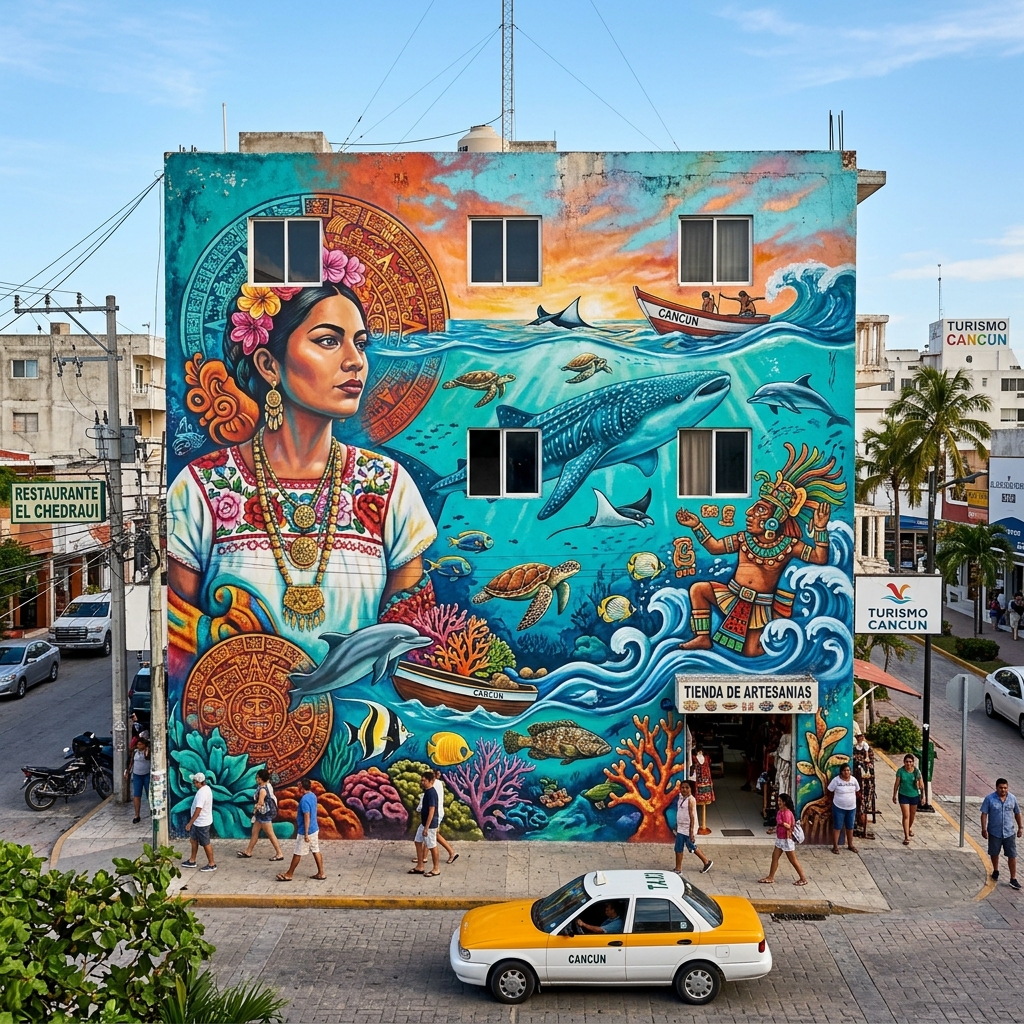
The Cancún that appears on travel brochures is the Caribbean coast Hotel Zone. The Cancún that locals actually live in has a vibrant street art scene, a growing independent music and gallery culture, and a Yucatecan cultural identity that has nothing to do with all-inclusive resorts. Here's where to find it.
Street art concentration areas
Av. Uxmal corridor (SM 21–25): The most concentrated area of street art murals in El Centro. The walls along and adjacent to Av. Uxmal have been canvases for both local and international artists for over a decade. The murals range from Maya-inspired geometric work to social commentary to photorealistic portraiture. Walk the street from SM 21 toward SM 25 and turn into the side streets for the full effect.
Around Parque Las Palapas: The park area and surrounding blocks have consistent mural presence, often on commercial buildings that commission local artists. The quality is variable but the quantity is high — a 20-minute walk around the park reveals dozens of pieces.
SM 64 and surrounding neighborhoods: Further from the center, the residential neighborhoods have murals that aren't curated for tourists — these are community pieces commissioned by neighborhood associations, local businesses, and schools. More raw, more varied.
Cultural events
Festival de las Artes: An annual festival (typically held in March or April) bringing visual art, theater, and music to El Centro and surrounding areas. Free or low-cost events across multiple venues. Check the Cancún city cultural calendar for 2026 dates.
Parque Las Palapas weekend events: Throughout the year, the park hosts free concerts, dance performances, and cultural exhibitions — particularly on weekends. The quality is consistently high and the atmosphere is entirely local.
Maya cultural programming at the Cancún Museum: The Museo Maya de Cancún (Hotel Zone, km 16.5) has permanent and rotating exhibitions on Maya culture and archaeology. The building itself — designed by Alberto González Pozo — is one of the more architecturally interesting in the zone. Entry: $80 MXN.
Independent galleries and creative spaces
Cancún's gallery scene is small but genuine — several spaces around SM 20–30 show work by Yucatecan and Mexican artists. The Centro Cultural Casa Zamná (Av. Yaxchilán area) hosts rotating exhibitions and cultural events. No permanent schedule — check social media for current programming.
The Yucatecan identity question
Cancún is a relatively young city (founded in 1970 as a planned resort development) but it sits in territory with 3,000 years of Maya history. The local culture navigates this complexity — there are strong Maya cultural influences in food, language (many Cancunenses speak Yucatec Maya or have Maya heritage), and art, existing alongside the completely synthetic Hotel Zone economy. This tension is visible in the street art, which often directly addresses it.
