
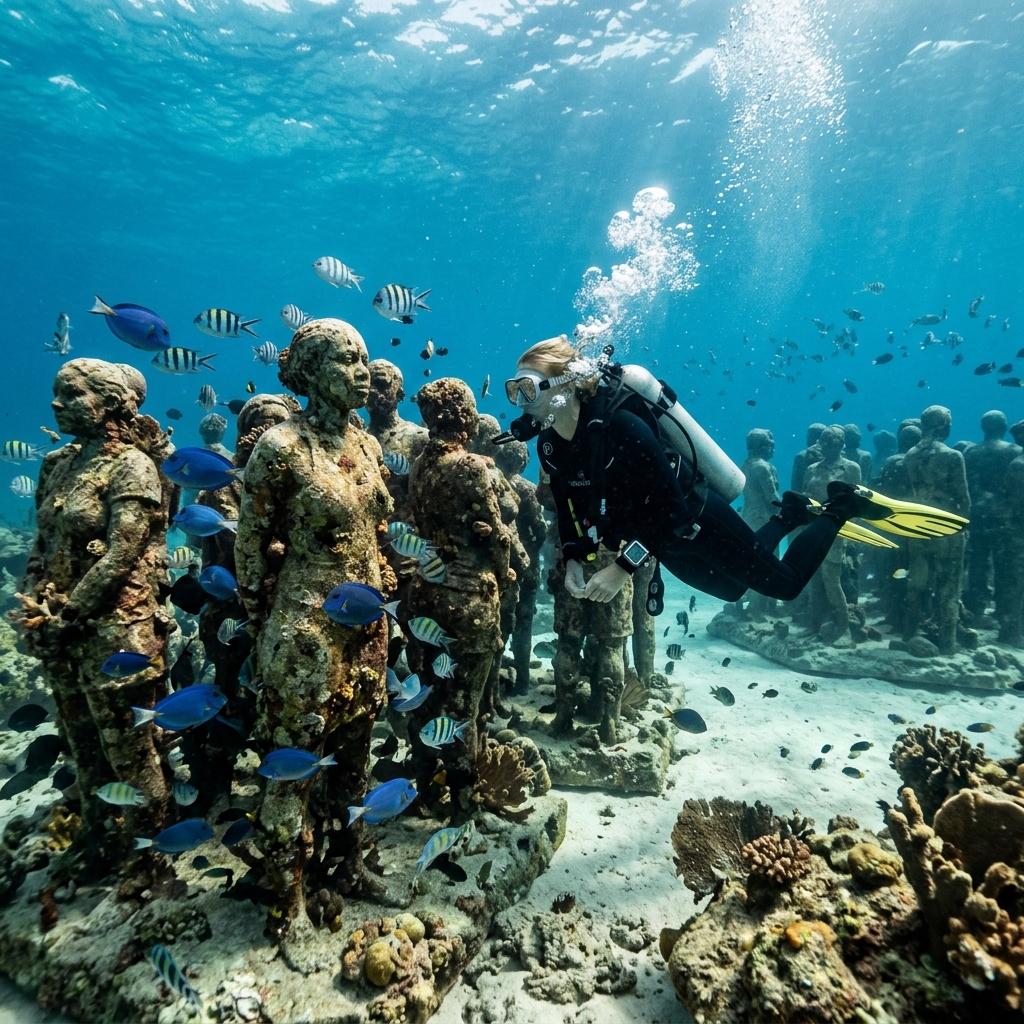
Cancún is not primarily a dive destination — that distinction belongs to Cozumel. But Cancún has several good dive sites of its own, including the MUSA underwater sculpture museum, accessible reef systems, and easy access to cave diving routes in the interior.
Cancún's best dive sites
MUSA Deep Section: The deeper part of the MUSA sculpture museum sits at 8–10 meters and is accessible only to certified divers. The statues are more dramatically colonized by coral at depth. Visibility: typically 10–20 meters.
La Poza: A channel near Punta Cancún (km 8). Strong current diving with good visibility — amberjack, bull sharks (November–March), sea turtles. Advanced certification recommended. Depth: 15–25 meters.
Chitales: A coral pinnacle system south of the Hotel Zone near Punta Nizuc. Multiple pinnacles at 8–18 meters, excellent coral coverage, good fish diversity. Best for intermediate divers.
Cenote diving: The sinkholes of the Yucatán interior offer some of the world's most unique cave diving — Dos Ojos, The Pit, Angelita. These require advanced cave diving certification.
Cancún vs Cozumel for diving
Cozumel wins on reef quality, visibility (often 30+ meters), and current diving at the famous Santa Rosa, Palancar, and Columbia walls. If you have one dedicated dive day, spend it in Cozumel. If you have multiple days and want variety — including cenote diving — using Cancún as a base makes sense.
Dive operators worth booking
Solo Buceo (km 5, Hotel Zone): The most respected dive shop in the Hotel Zone. PADI 5-star IDC facility, excellent equipment maintenance, small group sizes. Two-tank boat dive: $85–110 USD including equipment.
Aquaworld (km 15.2): Larger operation — more departure flexibility, dive packages combined with other watersports. Reliable safety record.
Certifications and courses
Open Water PADI certification available from multiple operators in Cancún — expect 3–4 days, $350–500 USD including materials, pool sessions, and four open-water dives.
