
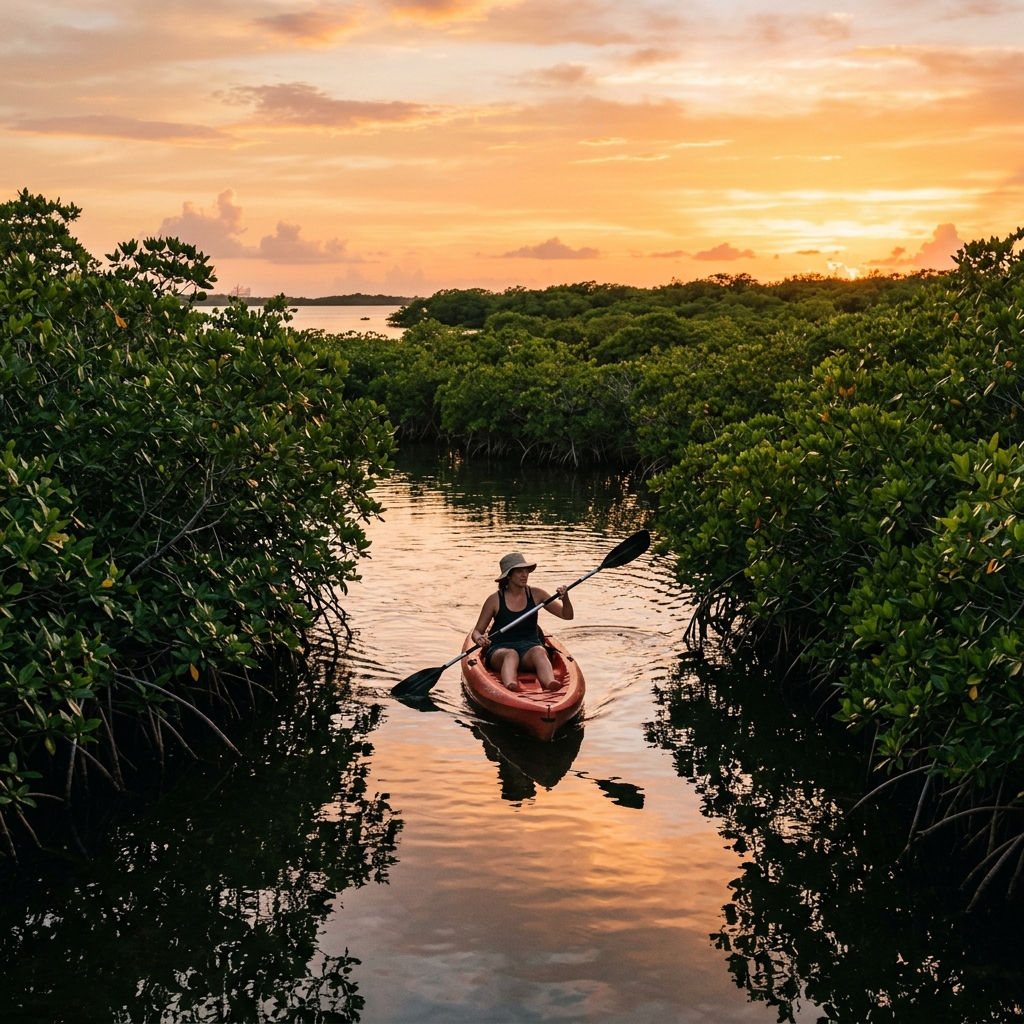
The Laguna Nichupté runs the full length of the Hotel Zone on the inland side of Kukulcán Boulevard — a sheltered, calm body of water that most Hotel Zone visitors never explore. It's one of the best free-time activities in Cancún for people who want to get off the beach without leaving the zone.
What the lagoon is
Laguna Nichupté is a protected coastal lagoon covering roughly 60 square kilometers. It connects several smaller lagoons through channels and mangrove corridors. The water is calm — no ocean swell reaches it — and varies in depth from 0.5 to 3.5 meters. The mangrove forests that line the edges support a significant bird population and are an important nursery habitat for fish species.
Wildlife you'll realistically see
Frigate birds almost always visible overhead. Brown pelicans diving for fish along the open water. Great blue herons and snowy egrets hunting in the shallows. Roseate spoonbills present year-round. American crocodiles inhabit the mangrove edges — visible but not aggressive toward humans in kayaks. Sightings are common early morning.
Routes
Mangrove corridor route (2–3 hours): From the km 10 access point, paddle south into the mangrove channels. The overhead canopy closes in places, creating a tunnel effect. Calm water throughout.
Lagoon crossing (1.5–2 hours): Open-water crossing to the western bank. Flat, fast if there's a light tailwind. The western bank has several small fishing communities accessible by water that aren't reachable by road.
Where to rent kayaks
Aquaworld (km 15.2): Single and tandem kayaks available. $25–35 USD per hour. No guide required for the open lagoon. Guided mangrove tours also available for $55–70 USD per person (2 hours).
Action Water Sports (km 11.5): Similar rates, slightly less crowded launch area. Stand-up paddleboards also available at the same price point.
Practical advice
Go early — the wind picks up in the afternoon and makes return paddling harder. Bring water, biodegradable sunscreen, and a waterproof case for your phone. The mangrove sections are partially shaded. Best months: December through May, when winds are more manageable.
